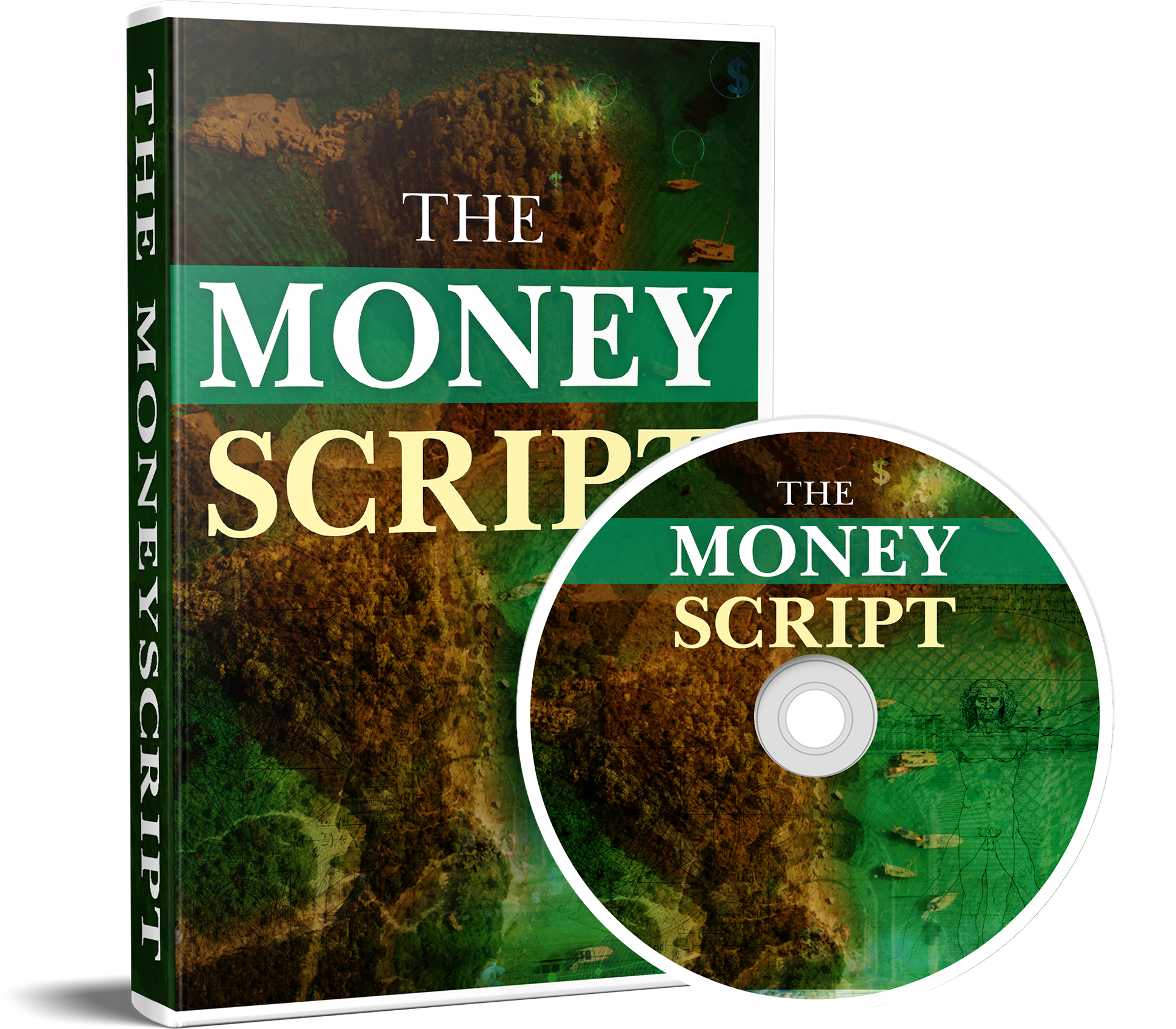
The Money Script
Honest Look at the Faith-Based Manifestation Program
What you're actually buying when you order this Christian-flavored money manifestation program, who gets value from it, and where the framing helps versus where it might constrain your practice.
Disclosure
This page contains an affiliate link. If you buy through it, I get a commission at no additional cost to you. The honest assessment below isn't softened by that fact. If anything, my obligation to you is stronger because of it.
I'm a curator, not a testimonial. I recommend products that pass my filter for value-to-buyer and absence of aggressive upsell funnels. The day I have my own products, those will carry my name as creator. Until then, this is the honest assessment of what's worth considering and what isn't.
What You're Actually Buying
For around $39 (sometimes shown at higher "original" prices crossed out), buyers receive a digital package that includes:
A core book in PDF format. The honest version is that this is a manifestation program with explicitly Christian framing. Scripture appears throughout. Prayers are included. The biblical verses cited (Mark 11:24, Romans 4:17, Philippians 4:6 among others) are used to ground the practice in faith-based language.
An audio component. Multiple audio tracks for different uses. Some are guided meditations. Some are affirmation-style audio that can be played during the day.
A set of prayers structured around money mindset and abundance. These are written prayers, not spontaneous ones, designed to be repeated daily.
A workbook component for tracking engagement and reflection.
The product is published by Binaural Technologies (the same company behind several brain wave audio products). The address listed is in Wilmington, Delaware. Customer support exists and is reachable, which not all ClickBank products can claim.
What's Actually in the Material
The substantive content of The Money Script combines several streams:
Money psychology. The core premise is that buyers carry inherited "money scripts" from family, culture, and personal experience that determine their relationship with money. This concept is real and well-supported in financial psychology research (Brad Klontz and others have published extensively on money scripts as predictors of financial behavior).
Christian framing of abundance theology. The material draws on what's sometimes called "prosperity theology lite," the position that God wants believers to flourish materially, that scripture supports the asking and receiving of abundance, that financial wellbeing aligns with rather than conflicts with faithful Christian living.
Practical manifestation techniques. Scripting (writing your desired financial reality as if it's already true), affirmations (specifically Christian-flavored ones drawing on scripture), gratitude practice, and visualization. These are standard manifestation techniques with Christian language layered on top.
Daily practice structure. The material recommends a 15-20 minute daily practice combining audio listening, written reflection, and prayer.
What's accurate to call this: a Christian-flavored manifestation program built on a real psychological insight (money scripts) with standard manifestation techniques presented through scripture-grounded language.
What's not accurate to call this: uniquely revolutionary, scientifically novel, or different from secular manifestation programs in any deep sense beyond the framing.
Why the Christian Framing Matters
This is where my read on the product diverges from most other reviews, which tend to either ignore the Christian framing or treat it as decoration.
The Christian framing matters because it changes who can actually use this program effectively. For Christians who have been practicing manifestation with quiet guilt about whether the work conflicts with their faith, The Money Script provides theological permission and grounded scripture-based language for what they're already doing. The framing isn't decoration. It's the answer to "is this a sin" for the practitioner who's been carrying that question.
For non-Christians, the framing creates friction. The prayers don't land. The scripture references feel imposed. The theological framing distracts from the practical techniques, which would be more accessible if presented in secular language.
For atheists or people who've left Christianity behind, the framing can be actively counterproductive. Some buyers have expressed frustration in reviews about not realizing how heavily the material would lean on Christian language. If that framing isn't for you, the program is the wrong purchase.
The honest assessment: this is a Christian product for Christians. The marketing sometimes underplays this to broaden the customer base, but the actual material assumes a Christian worldview and operates within that framework. Buy accordingly.
The Money Scripts Concept
This is the strongest part of the program and worth understanding regardless of whether you buy it.
The concept of "money scripts" was developed by financial psychologist Brad Klontz, who identified four common patterns:
Money avoidance. Belief that money is bad, that wealthy people are corrupt, that you don't deserve abundance.
Money worship. Belief that money will solve your problems, that more is always better, that financial success equals personal worth.
Money status. Belief that net worth equals self-worth, that you must outearn or outspend others to be valuable.
Money vigilance. Belief that money should be saved fearfully, that you must prepare for catastrophe constantly, that spending is dangerous.
Most people carry one or two scripts dominantly, often inherited from parents or shaped by formative financial experiences. The scripts predict behavior more reliably than stated intentions.
The Money Script program identifies these patterns (under different names than Klontz uses) and provides techniques for rewriting them. The rewriting work is real and supported by behavioral psychology research. The patterns aren't fixed. Sustained practice can reshape them.
This part of the program is genuinely useful regardless of theological position. The techniques work because the underlying psychology is sound.
Who Should Buy This
After looking at the material against the audience this site serves, here's the read on who gets real value.
This is worth considering if:
You're a practicing Christian who has been doing manifestation work and feeling theological tension about it. The framing of The Money Script resolves that tension by grounding the practice in scripture explicitly. The guilt about betraying faith can soften.
You're new to manifestation and need a framework that doesn't conflict with your existing Christian worldview. This is gentler entry than secular manifestation content for someone with a faith background.
You're carrying inherited money patterns from family that you can articulate (parents who were anxious about money, generational scarcity stories, religious teaching that wealth was suspect). The script-rewriting work directly addresses these patterns.
You can spend 15-20 minutes daily for at least 30 days. The program operates through cumulative engagement, not one-time consumption.
You're financially stable enough that $39 doesn't strain you. This isn't a product to buy when desperate. The desperation will contaminate the practice.
This isn't worth considering if:
You're not Christian or actively reject Christian theology. The framing is core to the product, not removable decoration. Other manifestation programs without Christian framing serve you better.
You're looking for specific tactical financial advice. This isn't a personal finance program. It addresses your relationship with money, not your investment strategy.
You're hoping for fast or dramatic results. The work compounds slowly. Pattern rewriting takes weeks, sometimes months. Quick results aren't realistic.
You can't afford $39 without strain. Free alternatives exist (more on those below). Don't take grocery money for this.
You've already done extensive work on your money psychology. If you've read Klontz directly, worked with a financial therapist, or spent years on inner work around money, this material may feel basic.
You expect this to substitute for taking aligned action. The book and audio support inner work. The outer work (changing how you earn, how you spend, how you invest) still has to happen. The program doesn't do that for you.
What 60 Days With the Material Looks Like
Buyers report a consistent pattern when they engage seriously with the program. Here's what the documented user experiences describe.
Week 1. Read through the core book once. Begin daily audio practice. Some buyers feel resistance to specific prayer components if their religious vocabulary differs from the program's framing. Adjustment by substituting wording that matches a buyer's own tradition (Catholic, Orthodox, mainline Protestant) generally works without losing the structure.
Week 2. Buyers identify their dominant money script (often a hybrid of patterns inherited from family and shaped by personal financial history). The naming itself is part of the work.
Weeks 3-4. Practitioners start noticing the script in real time. Catching the default to scarcity reactions in conversations about money, in spending decisions, in how they talk about their work. The catching itself is the work.
Weeks 5-8. Some patterns start loosening. The catching becomes more automatic. Specific moments emerge where buyers can choose differently than their default. Not all the time. But enough to notice.
Day 60. The patterns worked on directly are noticeably weaker. Other patterns that weren't worked on remain unchanged. The work is specific to what's actually engaged with, not generally applied.
What buyers won't tell you is that their income exploded or that they manifested specific dollar amounts. The work isn't about that. It's about removing internal patterns that were producing scarcity even when external circumstances supported abundance. That removal is real and useful. It's slower and more boring than the marketing suggests.
Real Alternatives, Honestly Compared
Most reviews don't address alternatives. Here's the real landscape.
Brad Klontz's books directly. Mind Over Money (2009) and Wired for Wealth (2008) are the source material for the money scripts concept. More rigorous than The Money Script, more secular, more substantive at similar or lower cost.
Lynne Twist's The Soul of Money (2003). Different angle on the same questions. Spiritual without being denominational. Beautiful writing. Different framework than money scripts but addresses similar concerns. Around $15.
Florence Scovel Shinn's books. The Game of Life and How to Play It (1925), Your Word Is Your Wand (1928). These are the foundational texts that everything in modern Christian-flavored manifestation descends from. Public domain (free) or very cheap. The original is sharper than most modern repackagings.
Free YouTube content on money mindset. Channels like Dr. Joe Vitale, Bob Proctor's archives, contemporary Christian manifestation content (search "Christian manifestation" on YouTube produces extensive free content). Variable quality but no cost.
The Genie Script ($43). Wesley Virgin's 30-day manifestation program. Different framing (more secular, more emphasis on subconscious reprogramming), comparable price, comparable structure. Different product, similar category.
Christian church or pastoral counseling. Many churches have financial wellness programs (Dave Ramsey's Financial Peace University is the most prominent, costs around $80 for 9 weeks). More comprehensive on practical finance, less explicit on inner work.
Working with a financial therapist directly. $100-300/session for someone trained in money psychology. Most expensive option but produces deeper individualized work than any program.
The honest comparison: The Money Script sits in a specific niche (Christian-framed inner work on money) where it's actually competitive. The combination of price, accessibility, and Christian language doesn't have many direct competitors. For Christians who want this specific intersection, the product is reasonable. For other audiences, alternatives often serve better.
The Money Discussion
Around $39 standard price. The 79% off "limited time" framing is marketing, not real pricing. The product sells consistently in the $29-49 range depending on promotional period.
The 60-day money-back guarantee is honored through ClickBank. Refund process is straightforward if the material doesn't work for the buyer.
There are no advertised recurring charges. The checkout flow should be read carefully to decline any optional upsells you don't want.
Customer support is reachable through the contact information on the site. This isn't always true of ClickBank products. The company appears to be a real business with real address and accessible support.
Frequently Asked Questions
Is this a Christian product?
Yes. The Christian framing is core to the material, not decoration. Scripture is cited throughout. Prayers are central to the practice. If Christian framing doesn't work for you, this isn't the right purchase.
Will this make me rich?
No, in any direct sense. The program addresses your relationship with money, not your earning capacity. You can have a healthy relationship with money and still need to do the practical work of earning, saving, investing. The inner work supports the outer work but doesn't replace it.
How is this different from regular manifestation programs?
The Christian framing is the main difference. The techniques are mostly standard manifestation practices (scripting, affirmations, visualization, gratitude). What's distinctive is the explicit grounding in scripture and the resolution it offers to Christians who've been doing manifestation with theological guilt.
Does it require I be a particular denomination?
The framing is broadly Protestant evangelical. Catholics, Orthodox, mainline Protestants can use the material with some translation work. Practitioners of other faiths or no faith generally won't find it useful.
How long until I see results?
The internal shifts begin appearing in weeks. The behavioral changes that follow take months. The external circumstantial changes that come from sustained different behavior take longer. Don't expect dramatic external shifts in the first 60 days. Expect inner work that's building toward eventual external change.
Can I use this alongside other manifestation work?
Yes, with awareness that the framing matters. If you're doing Neville Goddard work alongside this, the language differs. Neville isn't explicitly Christian (though some of his teachings draw on biblical interpretation). Mixing frameworks can produce useful synthesis or muddled practice depending on how you hold them.
Are the prayers required?
The program treats them as central. You can adapt or skip them, but the structure assumes you'll engage with them. If prayer isn't part of your practice, this isn't the right product.
The Bottom Line
If you're a practicing Christian doing manifestation work and feeling theological tension about it, The Money Script is competitively priced for the specific resolution it offers. The framing matters. The techniques work. The grounding in scripture might be exactly what you need.
If you're not Christian, the framing creates friction. Other programs serve you better.
If you're broke, free alternatives exist (Florence Scovel Shinn's public domain books are sharp and substantial).
If you've already done extensive inner work on money, the material may feel basic.
For the right buyer (Christian, manifestation-curious, willing to do daily practice for at least 60 days), this is a defensible purchase. The combination of psychology, theology, and practice it provides isn't widely available elsewhere at this price point.
60-day refund through ClickBank if it doesn't work for you.
This review is part of the curated store. The recommendations here are honest, including the criticisms. Products are included because they pass the friend test: I'd be willing to point someone I care about toward them. The day I have my own products, those will carry my name as creator.
Affiliate link. Commission at no extra cost to you. 60-day ClickBank refund if it doesn't work.