he first time I tried the pillow method, I wrote something generic. Something technically positive but completely hollow. I folded the paper, slid it under my pillow, and felt absolutely nothing. Which, it turns out, is exactly the problem.
The words on the page aren't the magic. The feeling they produce is. And that distinction changes how you write the note entirely.
What You're Actually Writing Toward
The store has a small curated catalog of products that complement this kind of work, if you want tools alongside the reading.
The Pillow Method: How and Why It Works covers the mechanics well, but the part that trips most people up is this: your affirmation needs to place you inside the having of it, not outside looking in.
"I am attracting money" keeps you at a distance. You're always attracting, never arrived.
"Money comes to me easily" is closer, but still a little abstract.
The version that actually works is specific enough to feel real when you read it in the dark at 11pm. Something like: "I love how financially free I feel. Everything I need is already handled." That sentence has somewhere to land in your nervous system. It gives your body a state to occupy.
And the state is the work.
Real Examples by Desire (and Why They're Worded That Way)
For a specific person: "I love how natural things feel between us. We're easy together, and I'm so grateful for it."
Notice there's no grasping in that sentence. No "I hope he texts me back." The version of you who already has the relationship doesn't hope. She knows. Writing from that place is what the pillow method asks of you, every night, until your nervous system stops arguing.
For money: "I'm so relieved. I always have more than enough, and it keeps coming." The word relieved carries a body sensation. When you read it, you can actually feel relief, even before the bank account agrees.
For a job or opportunity: "I'm exactly where I belong. This role fits me completely and I'm doing my best work." Present tense. No urgency. No desperation dressed up in positive words.
The Variations Worth Knowing
If you're looking for structured support alongside this kind of practice, the store has a small catalog worth looking at.
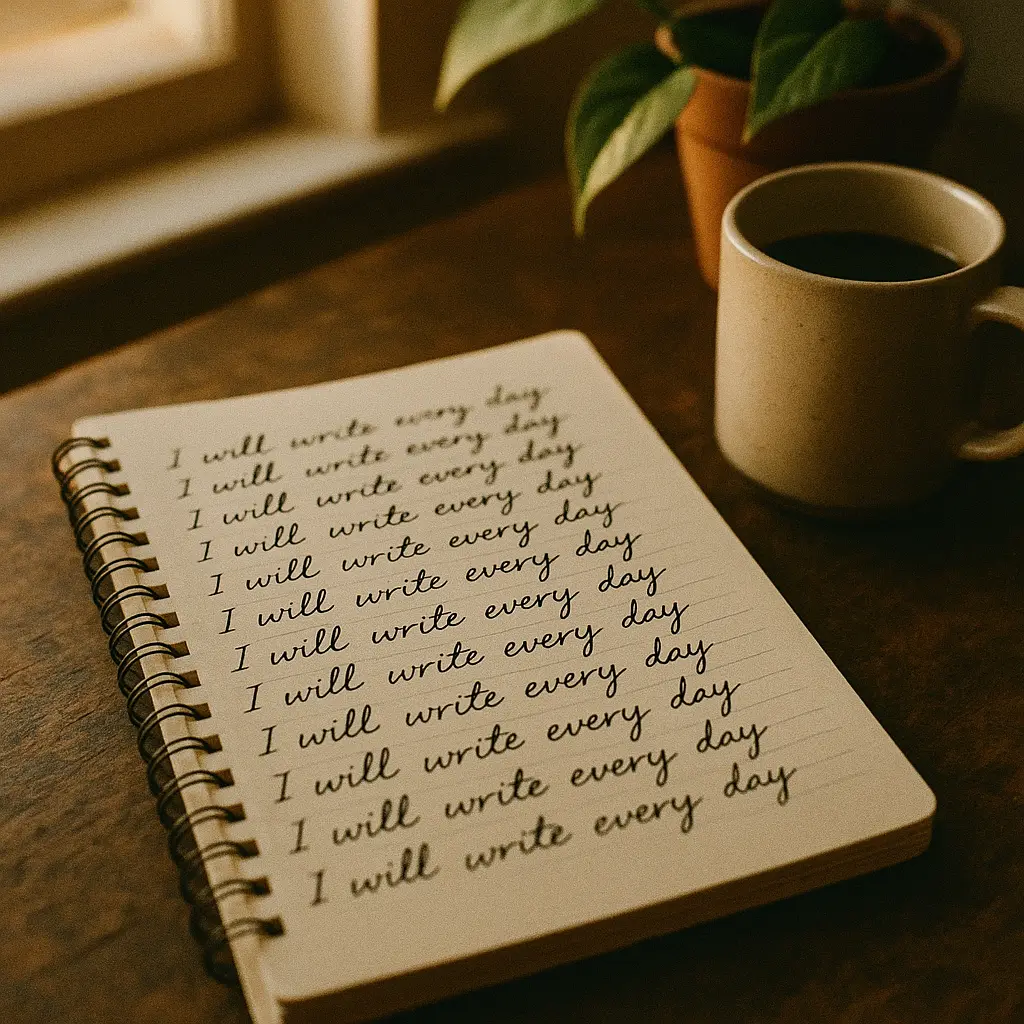
Some people do better with a single sentence, written over and over on the page (the scripting variation). Some do better with a short paragraph, almost like a diary entry from the future. Both work. The question is which one lets you drop in more easily.
There's also a spoken variation: you record a voice memo of yourself reading the affirmation aloud, and you play it softly as you fall asleep. The pillow becomes metaphorical. The principle is identical.
And for nights when the gap between where you are and where you want to be feels too wide to bridge with words? Shrink it. Write the smallest true version. "Something is shifting." "I'm open to this." A bridge statement, as Neville Goddard described, can carry you further than a leap you don't actually believe.
If the method feels stiff, how to use the pillow method tonight has practical guidance on setup. But honestly, the most important variation is the one you'll actually do. Consistently. With enough feeling behind it to count.
That's the whole damn thing.